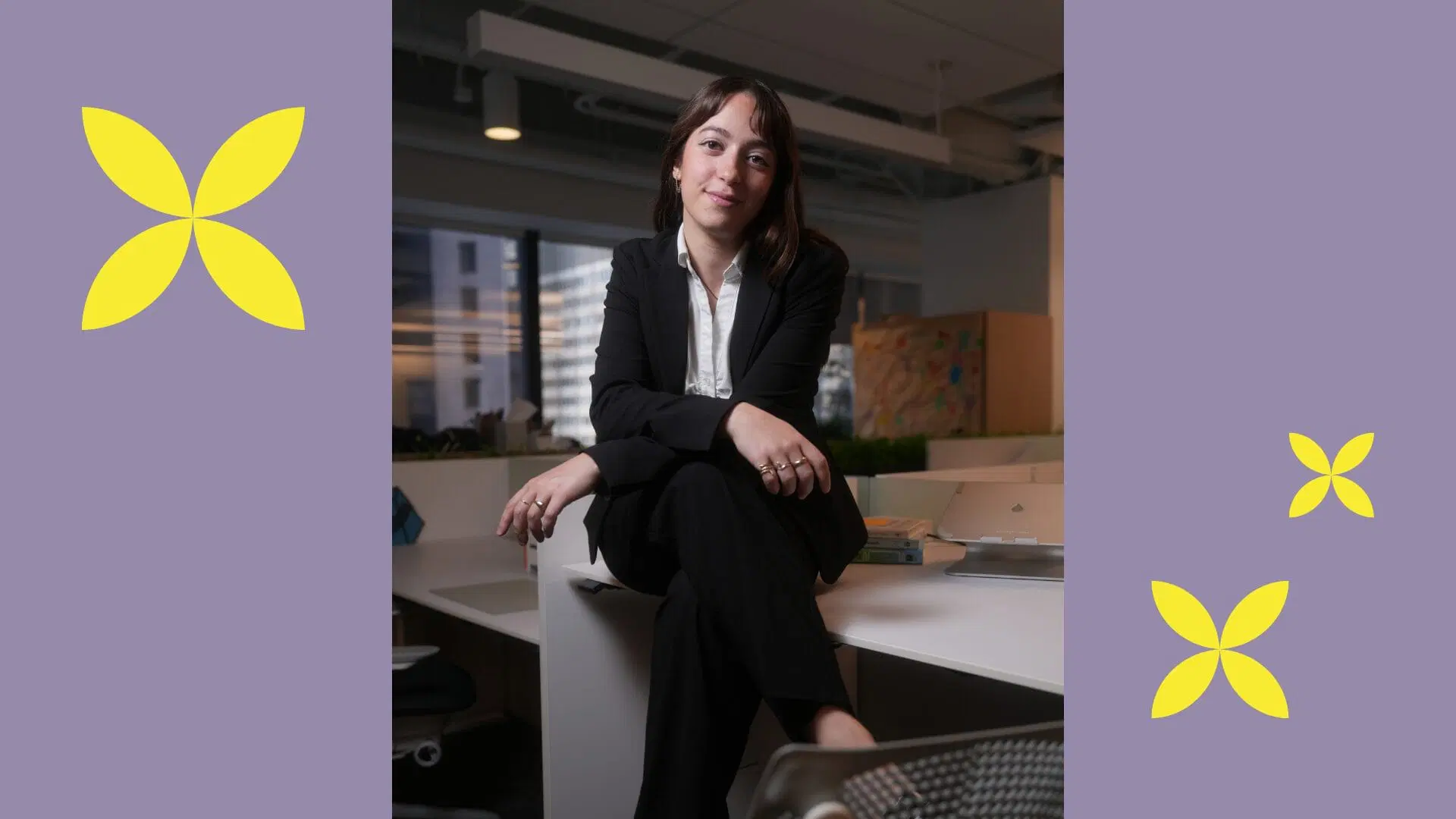
Editor’s note: This interview is part of the Hopelab series, Built by Us: Gen Z Women on Purpose, Passion & Power, and has been edited for length and clarity.
What drives you?
At the center of what drives me is the true belief that the internet can be better. The internet has been set up to be one particular way for so long, but a better future is possible. I’m a relentless believer that young people have the ability to make change by working together across industries, beliefs, and borders.
What does a “safe and free” internet look like to you?
A safe internet means platforms are designed for and with young people—safe by design and private by default, with real autonomy. Free means strong freedom of expression and space to share what matters. We need both.
How do we get there?
We need to make safety a priority across industry, government, and society. We all have a part to play in bringing these conversations to the forefront. It’s important that decision-makers gather more young voices in the rooms that matter – across fields like research, product design, and policy. We need to bring in the experts – young people in early and often at every step. Participatory design should be with us, not for us.
How does online time fit with offline life?
Use the internet to meet people, find community, and gain knowledge. Then, apply those connections and communities outside and offline. You can use the internet to host and organize things, but be present in the moment with friends. We should feel better after logging off, not worse. I think it’s amazing that there are a lot of young people who are passionate about getting people offline—and off of our devices—and into in-person spaces.
What does accountability look like for tech?
Technology has become less of a tool and more of a necessity, and we need to be clear on what its role is in our daily lives. We also need to start holding the companies, platforms, and individuals accountable for the choices they make that shape our mental health and make the internet less safe. When we rally against bad decisions, we are doing our work and making a better digital future.
What’s your purpose?
At the root, my purpose has been to advocate for justice and work intensely and passionately on things that I care about to create that meaningful change. Even in the complicated climate we live in, I see hope all around me. I see it in my friends, and I see it in the way that we interact with each other in my local community. There are people who genuinely care, and there are people who have both a vision for something better and the ability to work together to make it happen. Progress happens in community, not in isolation.
What does a real “seat at the table” mean?
Involve young people when the “table” is being built and through every conversation and decision after that, versus just bringing us in at the end. Too often, young people have been cast aside because of our age, but when we have a voice and take a stand in conversations around tech and mental health—and in every single industry right now—we continue to be a driving force for good. I deeply value the cohort of peers I do this work with; they prove that our stories and advocacy are effective. Young people don’t accept the status quo. We go forward and ask hard questions. To organizations, rely on young people’s expertise and engage in difficult topics to be better.
What’s next for the digital future?
Growing the movement of young people who show up and demand better. We were born into this world as digital natives and should be the ones to build this future. We have so much energy and excitement to put into remedying this and building something better for ourselves and for future generations.
How do you care for your own mental health?
I spend a lot of time outdoors, hiking in nature, and playing ultimate frisbee. I also take arts-and-crafts breaks; movement and making things help a lot.
How did you find this path?
In high school, I organized New York City students to walk out of school to protest inaction on gun violence. As I did that, I found intersections with gun violence, LGBTQ+ rights, women’s rights, and mental health. I decided to take a gap year before college to work full-time on Capitol Hill, lobbying for bills for young people. And, around that same time, I lost a very close friend to suicide. That experience led me to start focusing solely on the intersection of mental health and the internet. I went to college in Washington, D.C., continued my activism, and still advocate for digital governance, AI safety, and young people today.
Fun Facts About Arielle
Last song stuck in her head: “Barracuda” by Heart.
Summer adventure: worked as a horse wrangler at a ranch in Colorado.