Saanvi Arora is a graduate of UC Berkeley and the founder and executive director of The Youth Power Project, a nonprofit rewriting the story of who gets to shape policy, products, and public narratives in America.

How young people write policy, rebuild trust, and measure what really matters
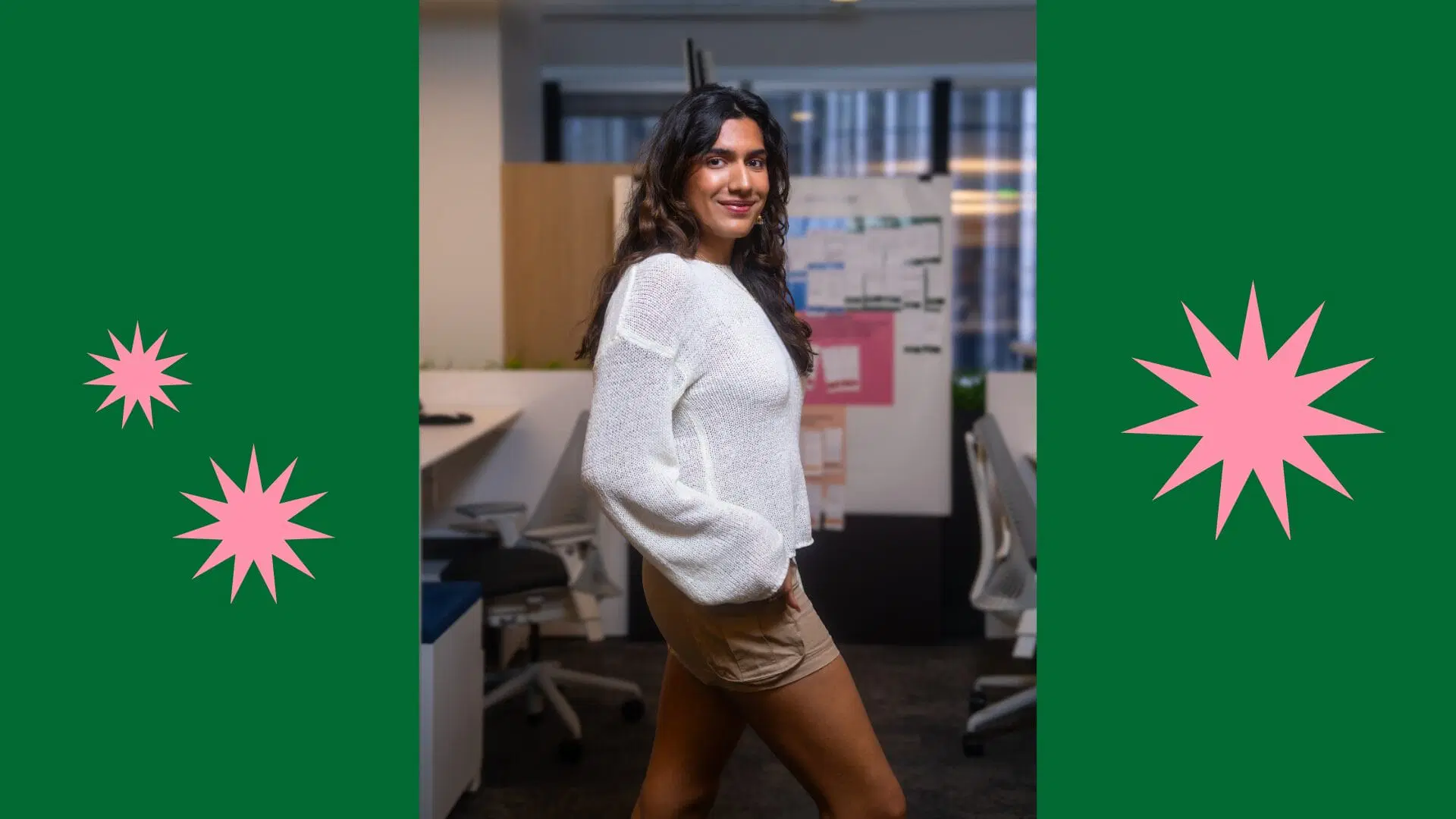
Saanvi Arora is a graduate of UC Berkeley and the founder and executive director of The Youth Power Project, a nonprofit rewriting the story of who gets to shape policy, products, and public narratives in America.
Editor’s note: This interview is part of the Hopelab series, Built by Us: Gen Z Women on Purpose, Passion & Power, and has been edited for length and clarity.
Connection and feeling things deeply. I’m a Cancer, so I’m a very emotional person. When I feel really connected to something, I really want to do something about it, and it fuels a lot of my passion. I’ve been raised by so many powerful women. My mom came to the United States from India right before I was born and went to San Jose State. They didn’t have a program in cybersecurity at the time, so she created the Cybersecurity Master’s at San Jose State; it’s still running to this day. My grandma was the first person in her community to work in India’s court system. She was the clerk, and her main job was translating in the local courts. I feel like I draw a lot of drive from that part of my lineage—of women who did things first, led, and believed in themselves. The interweaving of my personal and professional spaces has given me the drive to continue bringing facets of emotional relevance and vulnerability into my work. I really draw upon my heritage as a South Asian American woman. I try to carry my culture with me wherever I go. I’m drawn to the idea of belonging, community, and connection. I want to do more and have love for so many issues and people in my community.
Young people create vitality in many of the movements I care about. I’ve been moving past this idea of age itself as a binary attribute that defines whether you can contribute to a space. I’ve been learning a lot more about what it means to bring that vitality into intergenerational spaces. I really enjoy the fact that there are many spaces out there to brainstorm with peers in a very non-judgmental way.
Sometimes, young people are brought in during certain phases of decision-making where their feedback isn’t the most helpful and can’t actually make a direct change. But there are structural elements to representation that can turn it into a partnership where you really see a young person being included from start to finish. When these partnerships go well, it’s really with the recognition that young people can provide support from start to finish in a holistic way and bring in others. For example, giving young people the ability to put pen to paper, draft policy on a Google document, and actually introduce it is a great example of start-to-finish inclusion and something that’s not very performative. On the other hand, sometimes we see policymakers or even institutions call in a community to simply check a box without there even being room for their feedback to be received in the first place. Good examples of a real ‘seat at the table’ are ones where the true tenets of a partnership are exhibited between two groups—co-creation or championing another group’s creation. When young people are adequately represented, it’s easy to pass that ladder back down and bring other young people into the mix and into the space.
I first got involved in policy work when I was 15 and went to a protest. Later that year, I lost a close friend to suicide and started volunteering for crisis services in my area. I met someone my age who had many ideas for how we could change some of the issues we’d been seeing through the state legislature. Together, we drafted ideas in Google Docs, found staffers on LinkedIn, and emailed proposals. By the end of high school, graduation, five of the bills we wrote had been signed into law. I hadn’t even turned 18, and I realized I wanted more young people to know they can do this, too. This is what led to the Youth Power Project.
I went to the California government website and learned about the process by which a bill becomes law. I quickly learned that lawmakers don’t really write their bills themselves; they have a team of people that helps them draft them, at least in California. They can introduce several bills in a year, and depending on how the legislature goes, they might become law or might not. I literally went on LinkedIn and searched for “Assembly member XYZ, legislative director,” because that’s how I learned how these things were formatted. I found their name and messaged them there. Then, I noticed that there’s a specific email format in the legislature. For example, it’s usually first.lastname@assembly.california.gov. We’d just plug that in and see who answered.
I thought that to affect policy at the state, federal, or local level, you had to be an elected official, or that the end goal of civic engagement was becoming a politician. One of the ways that we got in contact with lawmakers in the beginning was literally stalking their staff on LinkedIn. (Which is normal, I promise). I remember that initial shock of being like, “Wow, I can contact this person, and there’s someone who can receive my concerns. That’s so cool.” I emailed them from my Gmail account and connected with them through LinkedIn. My first ever LinkedIn experience was actually connecting with the lawmaker’s staff.
The Youth Power Project is a non-profit that started in California and now operates nationwide. We are focused on bringing young people with adverse health experiences into state and federal policy work, and narrative change around that. I started this work because of my own personal experience losing members of my community and people that I loved to suicide, and I know the systemic barriers they faced in accessing care. I think one is really oriented around this idea of distrust and why people in communities, especially young people, may or may not trust the services around them. This can be education, healthcare, and so on. The Youth Power Project holds community workshops, has meetings, and hosts spaces for young people to really talk and figure out ways to channel their narratives into policy spaces and continue to move conversations forward. The second prong of our narrative work is really focused on creating public media campaigns that center young people’s lived experiences and voices—both the positives and negatives of their experience—with seeking help. We use that talk to policymakers and the general public about what it means to access support when you need it.
There is such a severe amount of distrust between young people and the institutions that serve them. A lot of common rhetoric frames those young people as apathetic or disinterested in receiving support or being civically engaged. But their repeated marginalization and exclusion from those spaces have created disillusionment. When we talk to people designing systems of support—especially in healthcare or education—they use a vastly different language than young people. Rebuilding trust can start with language. I’m really interested in how technology will shape these conversations and the ways young people receive healthcare and education around their well-being. Technology’s already proven to be a big mover and shaker in that space, and I’m excited to continue working with more young people and bring the next generation of youth into these conversations.
Many young people are focused on creating new services or policy conversations, but not necessarily on the measurement or KPI questions of the work. Fortunately, I’ve seen a lot of energy among the young people we work with to understand how to quantify success in a way that’s truly accurate to them. It’s giving them seats at the table and having them lead conversations around what it really means for a program or for policy to be successful. It’s been really cool to see a lot of young people interested and innovative in how they think about program measurement. I think that’s another great way to rebuild trust—to know you can not only create something, but you can also ensure it lasts.
It’s helpful for me to go outside and remind myself that I’m on earth and that we’re all just living human beings. I play basketball and am a big fan of movement. Pick-up games with my friends, hikes, and cooking a good meal—I love doing that kind of stuff. Cooking is such a great way to learn more about other people’s cultures, too. It’s such an intimate experience to eat a home-cooked meal from your friend’s culture, and it really strengthens bonds.
Proud foster “co-mom” to: rotating litters of kittens.
Superfan status: Ariana Grande (Sweetener on repeat).
Last big laughs: grocery-store mishaps and a Bollywood movie night.