Celebrating Margaret Laws’ 10 Years Leading Hopelab
Hopelab is honored to celebrate Margaret Laws’ leadership as our President & CEO. As Margaret transitions to Executive in Residence in January 2026, our team wants to take a moment to look back at the impact she has had on the organization, our staff, partners, and projects.


"Margaret has had so many types of impact at Hopelab, but one of the biggest is her ability to balance a focus on building an internal culture that is really the backbone of our ability to work on our mission. It's a unifying culture that requires a lot of care and tending and attention, and it's such a gift to work in that culture.”

"She's someone who leads with vulnerability, which I think is really special in a leader, and that immediately engenders a sense of trust with those around her. I imagine that all these people that Margaret has mentored, guided over the years, are carrying forth her values, her wisdom, and it makes me smile to think about how far that will go."
Margaret's personal touch and vision have helped guide and evolve Hopelab into the organization it is today. Through it all, she has always kept the young people we work with at the center of our programs and strategy. Never taking her eye off why we do the work we do and who we are trying to support.

“Margaret’s impact has been enormous. In my first week, she fired away with information, strategy, programs, design — a million helpful pieces. She told me, ‘10% of your job is being a connector out in the world.’ That nugget of wisdom has served me my entire career. I don’t know if she knows how these little nuggets of wisdom have a massive impact on her staff.
A Timeline of a Decade of Impact
Early learnings that influence our work and that of others
With our founding values and spirit of experimentation and science translation, Hopelab built prototypes with young people to better understand loneliness and social connection, goal setting, and social and emotional support mechanisms.

Informing the field with meaningful data
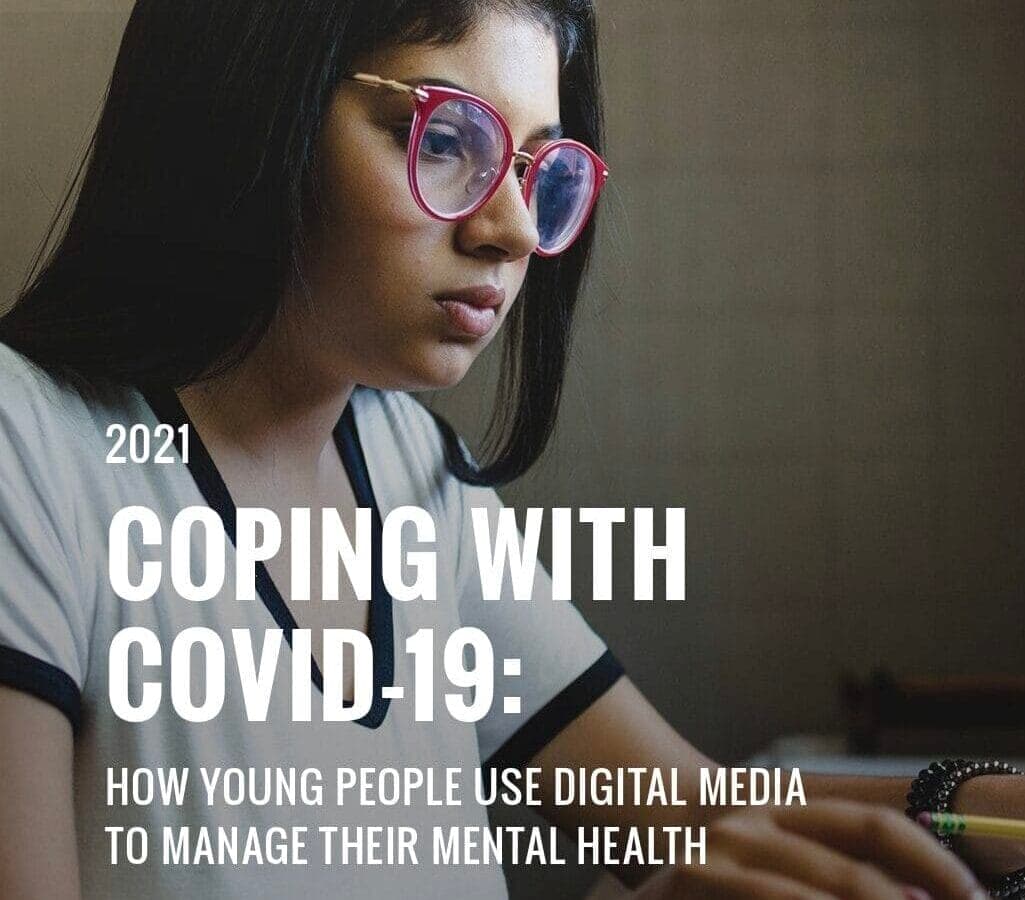
In 2017, Hopelab launched its National Survey. The first was created in partnership with Susannah Fox, formerly of Pew Research Center, and Vicky Rideout, formerly of the Kaiser Family Foundation. Recent editions were developed with Common Sense Media, and in 2024, young people were involved in its creation and data co-distillation. In all, 11 research reports have been published about the impact of technology on youth mental health.

Co-funding with other mission-aligned investors in an impactful portfolio of companies
In 2019, Hopelab launched Hopelab Ventures to support entrepreneurs developing solutions that support young people, particularly in underserved communities. To date, we have invested in 25 companies that have reached 4.3 million young people, including 3.8 million BIPOC and 3.3 million low-income young people.

Directly supporting young leaders alongside co-funders
As youth mental health gained more attention and investment, Hopelab shifted to a partnership strategy in 2020 to leverage our capabilities with the financial investments of other funders. To date, we have supported over 90 young people and dozens of youth-led organizations.

Catalizing investments through a co-funding model
In 2023, research supported by Omidyar Network — combined with Hopelab’s interest in youth co-creation and voice — led to the launch of the Responsible Technology Youth Power Fund. To date, the Fund has supported over 35 youth- or intergenerationally led nonprofits. Hopelab’s efforts have helped catalyze $15.2 million for youth-led, upstream, or equity-centered initiatives for youth well-being.

Leveraging our role as an operating foundation to support the field
Starting in 2023, Hopelab expanded our team to focus more deeply on systems change and youth engagement. We have added expertise and funding for policy and narrative change work, which allows us to leverage our learnings to reach more diverse audiences and catalyze change.

Ensuring youth mental health solutions are grounded in science
Since our founding, Hopelab has always understood and been guided by the power of science to create meaningful impact for young people. Translating science into better policies and practice continues today through the Purpose Commons, the HBCU Fellowship, and our policymaker education work.

Q&A with Margaret Laws
How has Hopelab developed expertise over the past decade?
We’re out in the field with our investment fund, working on and learning about the products and services that young people use every day. We’re conducting research, with a particular focus on marginalized populations, including studies on Black, Brown, and Queer young people. We’re also working with young leaders to support their efforts in the youth mental health space.
We learn from each of those areas and apply those learnings to our other work. That’s one of the things that really sets us apart—the fingers we have in several different areas of the market, and the ways we get touchpoints from those different places and bring them back into the broader work that we do.
What do you think sets Hopelab apart?
We have a fairly unique structure. We’re set up as an operating foundation. So we actually have a lot of person power, and a lot of ways that we bring our team into projects to develop new initiatives. And often, create things that other people can join.
We have an impact investment practice, and we have a focus on youth voice and power, where we’re really engaging young people. We do work in research, strategic communications, and policy. We have been working on what we call foundations for well-being, focusing on upstream issues such as purpose and belonging.
When we’re working at our best, we bring together aspects of all these different competencies. So, we can develop a project where we’re the doer, but also be out in the field serving as an influencer in the policy landscape and bringing in other funders to leverage the funding and resources we invest. It is a unique ability to both build and execute projects, as well as influence others to join in, and leverage the resources we have to allocate more funds and assets towards youth mental well-being.
What has it been like to work with young people on these issues?
From the very beginning, an important part of Hopelab’s DNA has been co-creation and collaboration with young people. And it’s been an incredible opportunity for me over the past decade to work with amazing young people, on everything from their participation in projects to collaborating with us on surveys, and most recently, adding a young person to our board.

The wisdom, experience, and passion that the young people we work with bring to the work make it so exciting to be at Hopelab. I feel truly honored to have had the opportunity to both get to know and hear from, as well as create a centered space for, those young people, and to work with colleagues who share my passion for this as much as I do.
What’s next for you personally?
In January, I will transition to Executive in Residence, where I will have more time to explore what I’m calling frontiers in mental health and well-being.
I’ll continue working on what has been a career-long, decades-long pursuit for me: supporting underserved populations and exploring the intersections of technology and policy, with a focus on what we can do in the technology for social good area. This past decade at Hopelab also has me thinking deeply about where I might be able to innovate and create impact in whatever the next chapter is.
I have a lot of interesting opportunities and irons in the fire, and I’m excited to have some time to explore and experiment.