
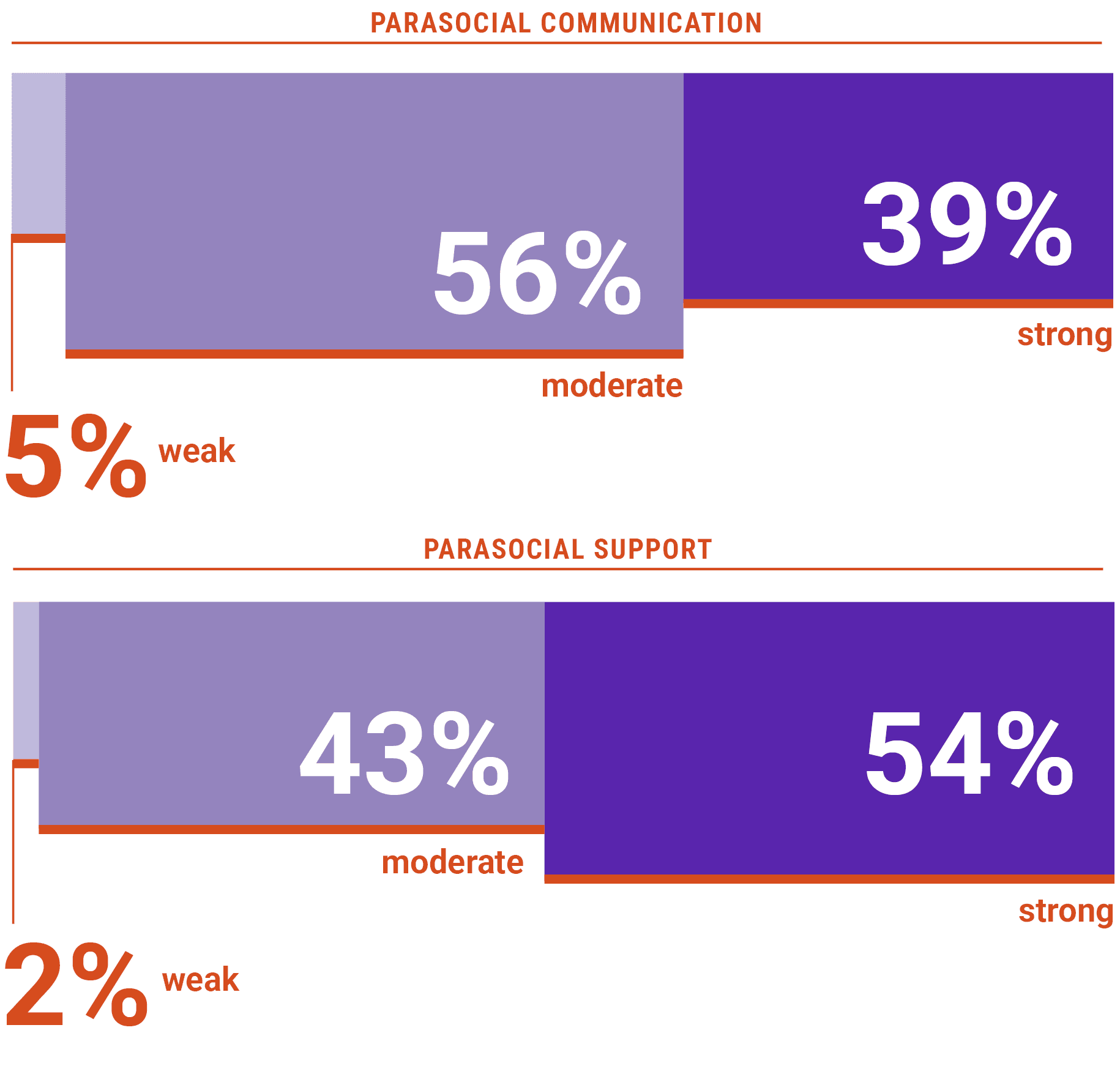
Parasocial relationships are generally strong among the young people sampled, suggesting that many LGBTQ+ young people form strong, meaningful bonds with social media content creators.
Parasocial support is especially strong among white and Latinx young people compared to Black young people, teens compared to young adults, and rural compared to suburban young people.
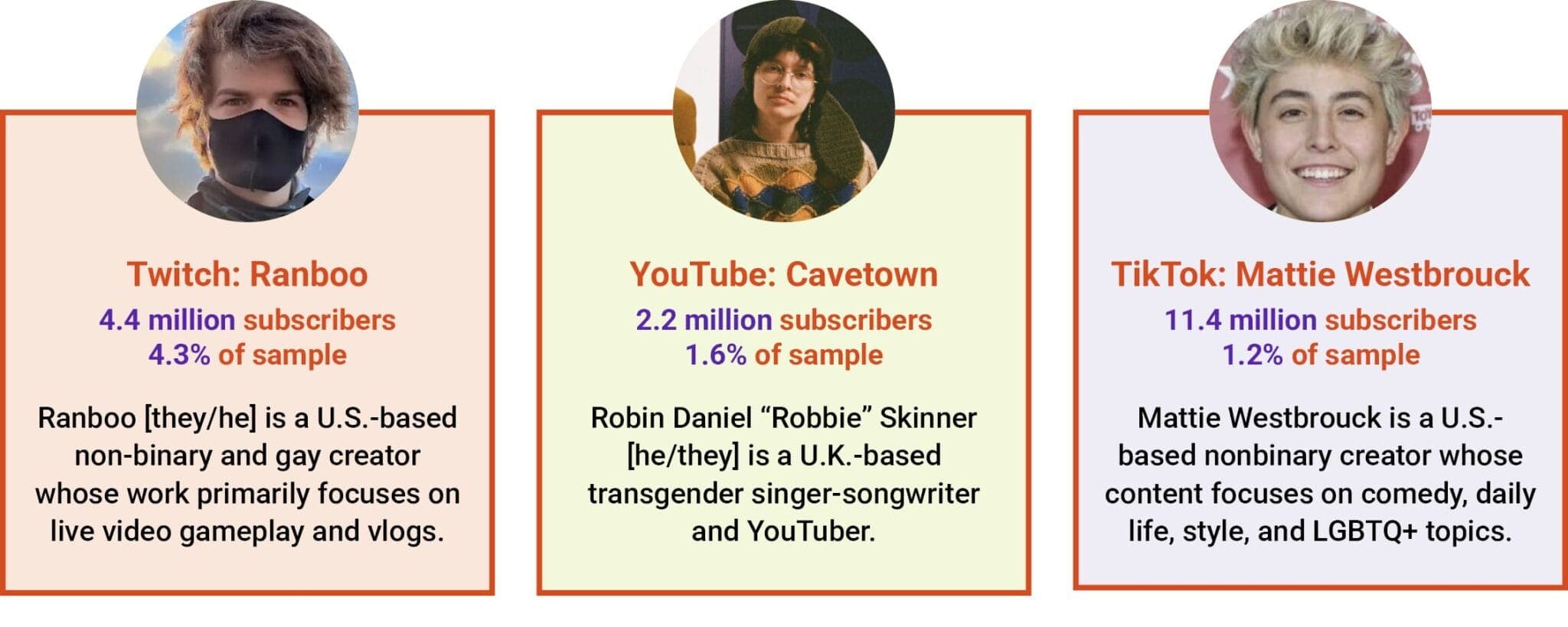
Young people in the survey listed their favorite LGBTQ+ social media content creators. These creators have substantial followings but are not major celebrities. Their accounts were described as more relatable, less curated, and more frequently updated. Their content often centers on personal growth or LGBTQ+ identity more than major celebrities.
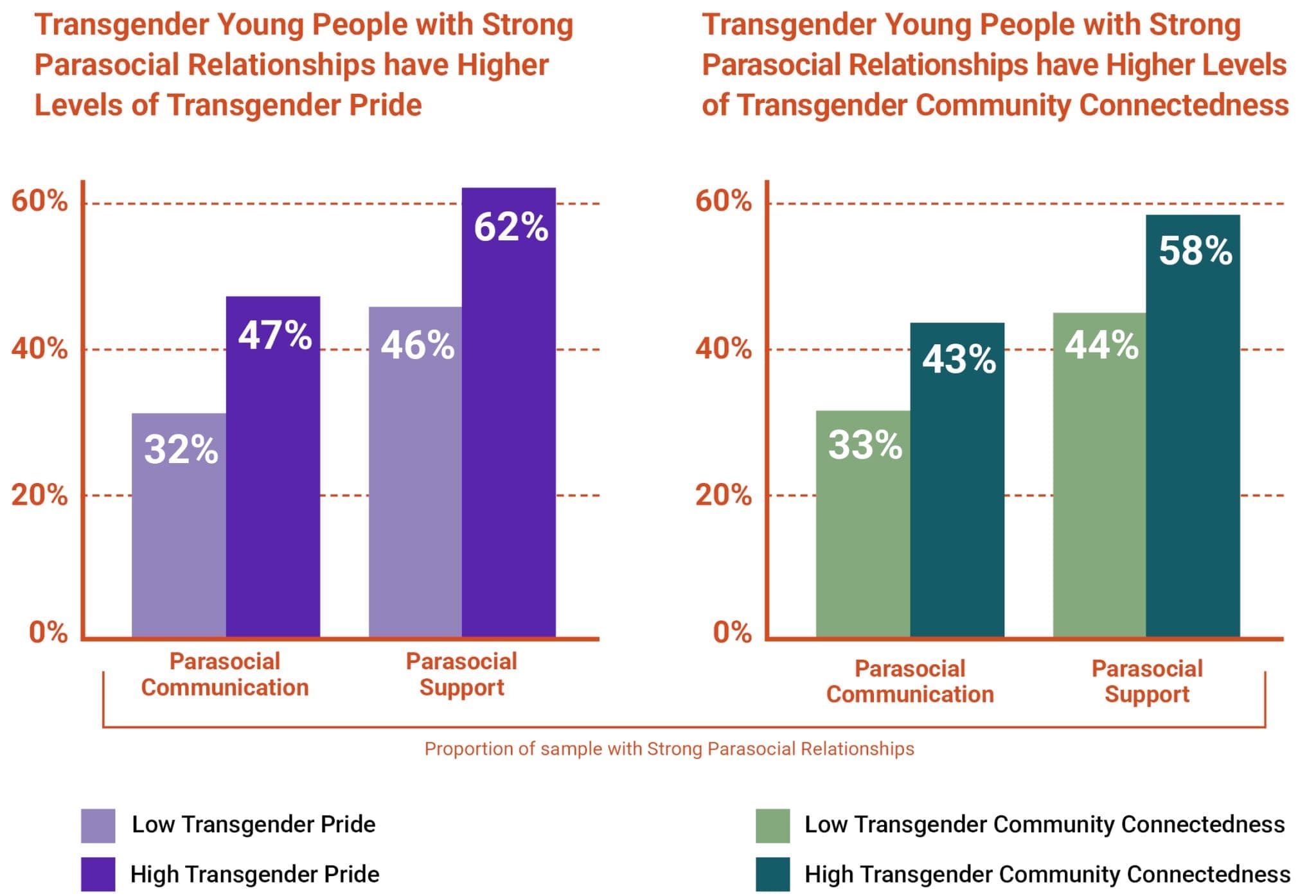
Parasocial relationships may provide transgender and nonbinary young people with important access to
personal stories from other people who are similar to them. We found support for parasocial relationships
being linked to higher levels of transgender pride and higher levels of transgender community connectedness
among transgender and nonbinary young people.
Contact with traditional media figures is very limited in traditional media, such as television and movies. In contrast, on social media, anyone can comment on content creators’ posts or send messages to them.
Most of the young people in the survey (61%) had interacted with their favorite content creator’s posts in some way, and parasocial relationships were stronger among those who had reached out to the
content creator at least once.
Content creators may also respond on social media. Of the young people who had reached out to their favorite content creator, 38% received some form of reply–and parasocial support was stronger among those who got a reply.
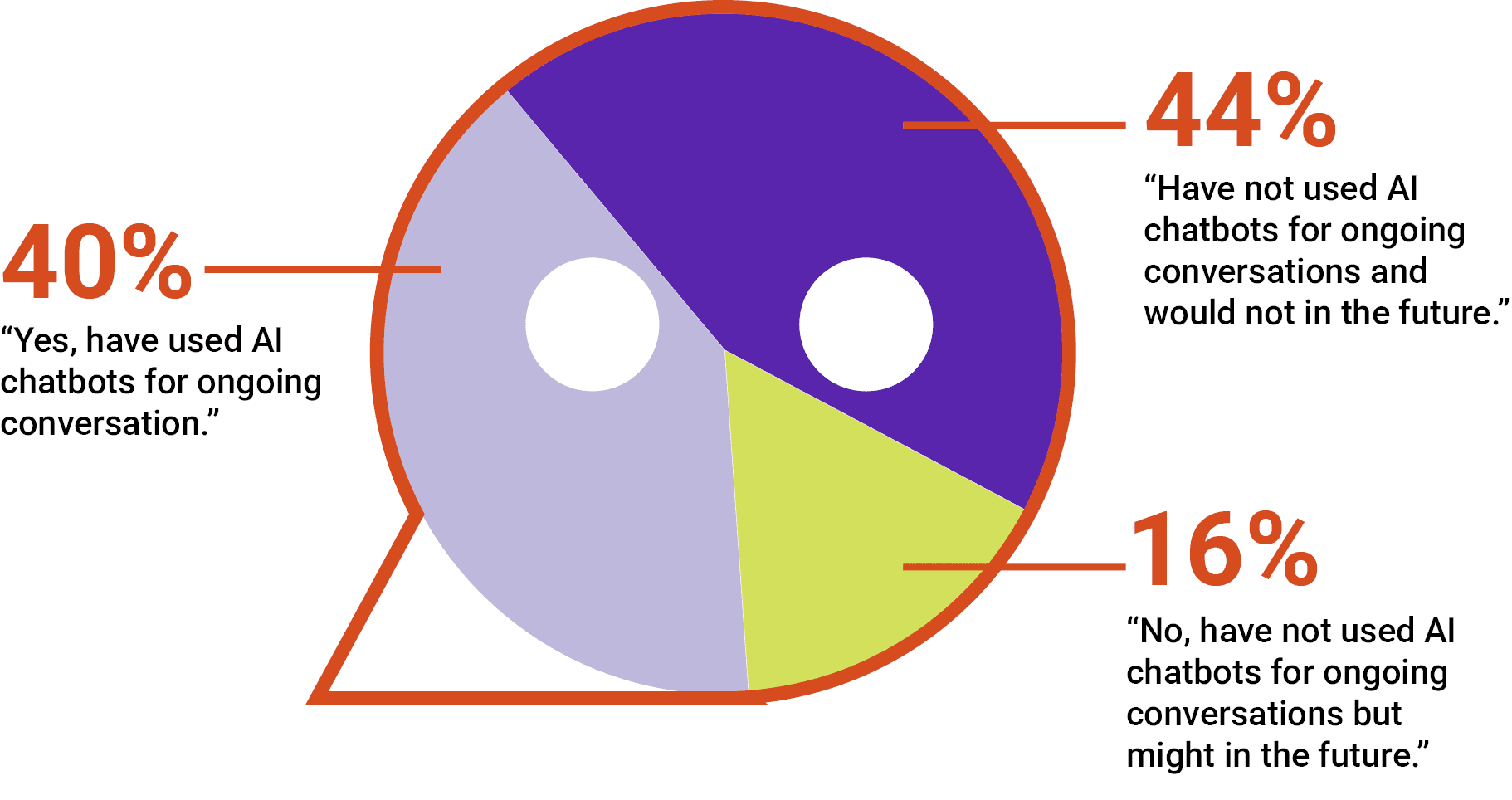
Four in 10 young people in our sample reported using chatbots to have ongoing conversations (40%). A smaller number (16%) reported that they had yet to have ongoing conversations with a chatbot but may do so in the future, while 44% reported never engaging or intending to engage in an online conversation with an AI chatbot.
To gain a more detailed understanding of ways online interactions facilitate joy for LGBTQ+ young people, we asked participants to answer the following prompt: “Tell us about ways you’ve experienced joy from interactions you’ve had on social media.” The top three emerging themes were online conversations and relationships, shared identity, and feeling less alone.