
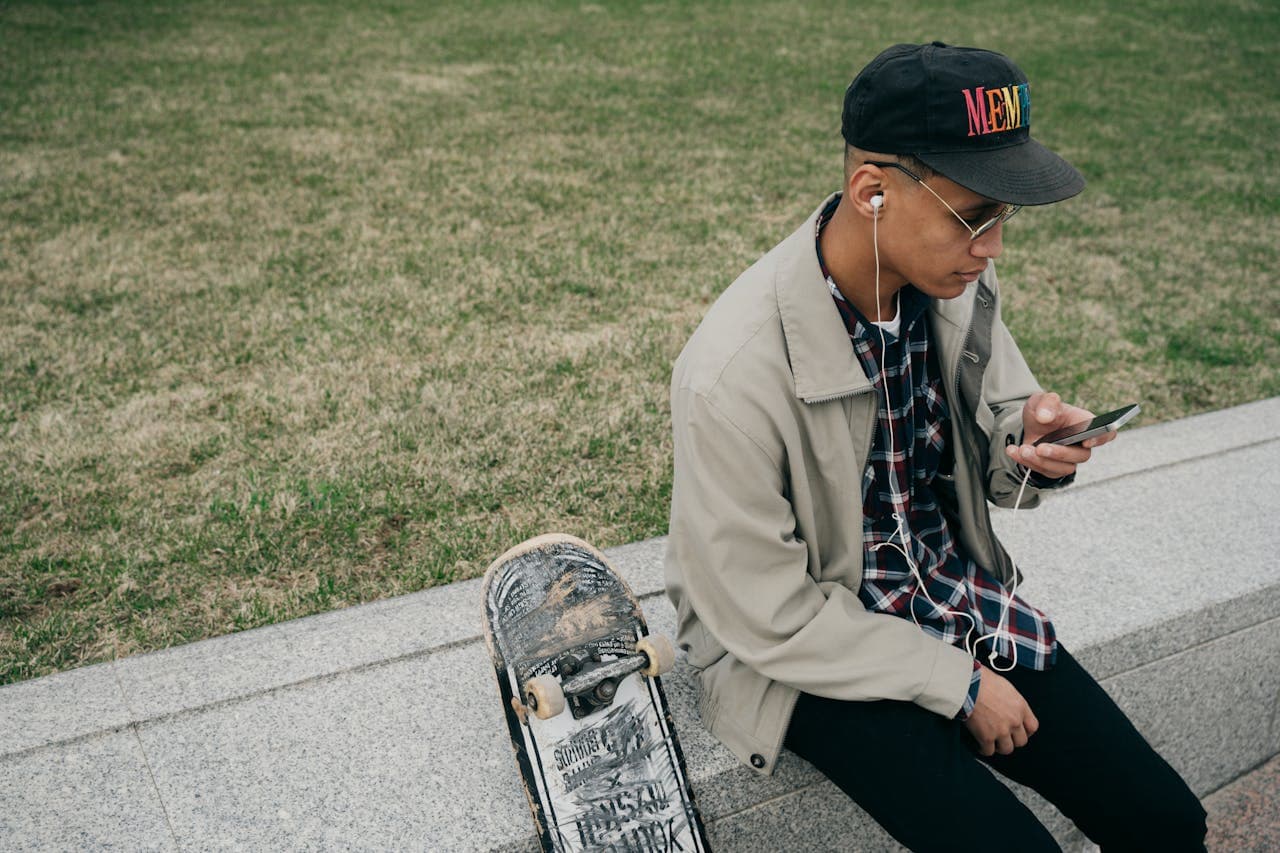
This blog is part of a collaboration with Headstream’s Youth Collective Program, which aims to uplift the voices of creative young leaders and nurture a future generation that can confidently shape a safer and more responsible digital world.
The digital space is a rapidly developing scene, with the good, the bad, and the ugly of cyberspace centered on all facets of social media. Gen Z can attest to being the ‘last’ transitionary generation, raised in a time when technology rapidly adapted to daily life. Young people recall handing in their paper and pencils for computer labs. Now personal laptops and smartphones are ubiquitous. The World Wide Web is what it was always engineered to be — everywhere.
Social media is purposefully made addictive. The algorithms take note of any video that might make you pause, even a second over your average, and that data is collected and analyzed to recommend related posts. Its motive is profit. However, teens are not passive in big tech’s bid for their attention. They leverage this expensive currency into something that uplifts, feeding information back into their circles, working to take back their agency. Data collected from Hopelab’s 2024 National Survey corroborates, “81% of young adults and 68% of teens say they enact strategies to avoid content they dislike”. Most adolescents are knowledgeable in finding loopholes to enact agency over what they consume, from reporting posts, spamming the ‘not interested’ button, or blocking accounts, teens have created smart workarounds to avoid what they don’t want to see.