Report
LGBTQ+ young people face greater mental health burdens, yet nearly all can name a reason for hope.
Federal funding focused on LGBTQ+ well-being has been nearly eliminated. As LGBTQ+ young people navigate an increasingly challenging social and political climate, research from Hopelab and Data for Progress finds that LGBTQ+ young people experience significantly worse mental health than their straight, cisgender peers and have a much dimmer outlook on the future.
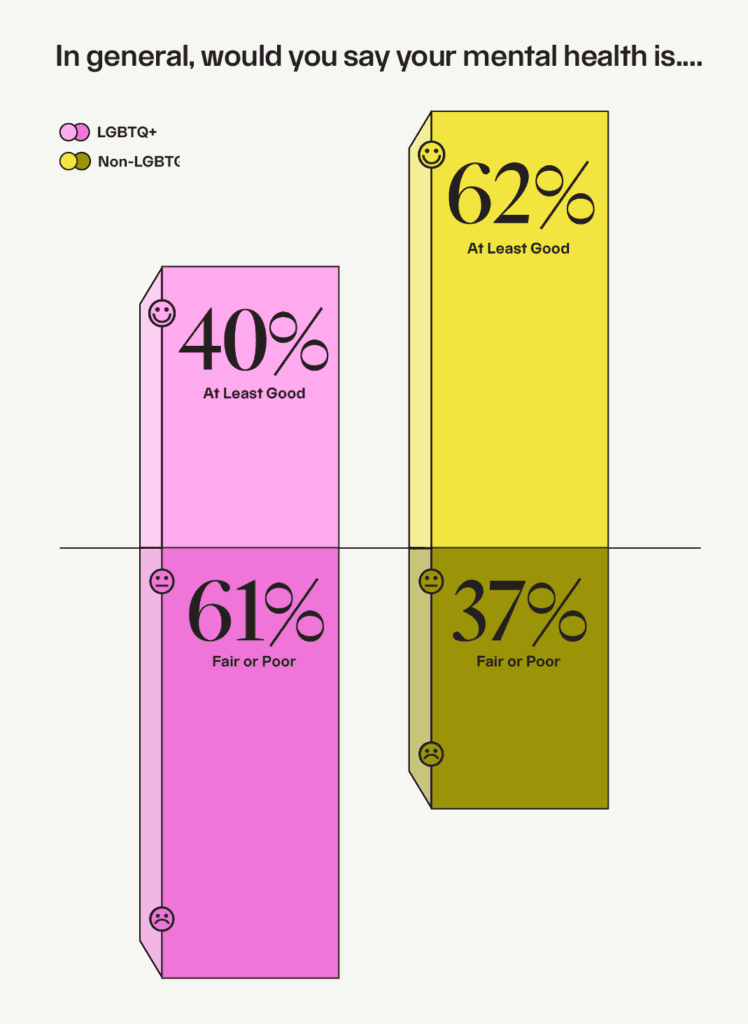
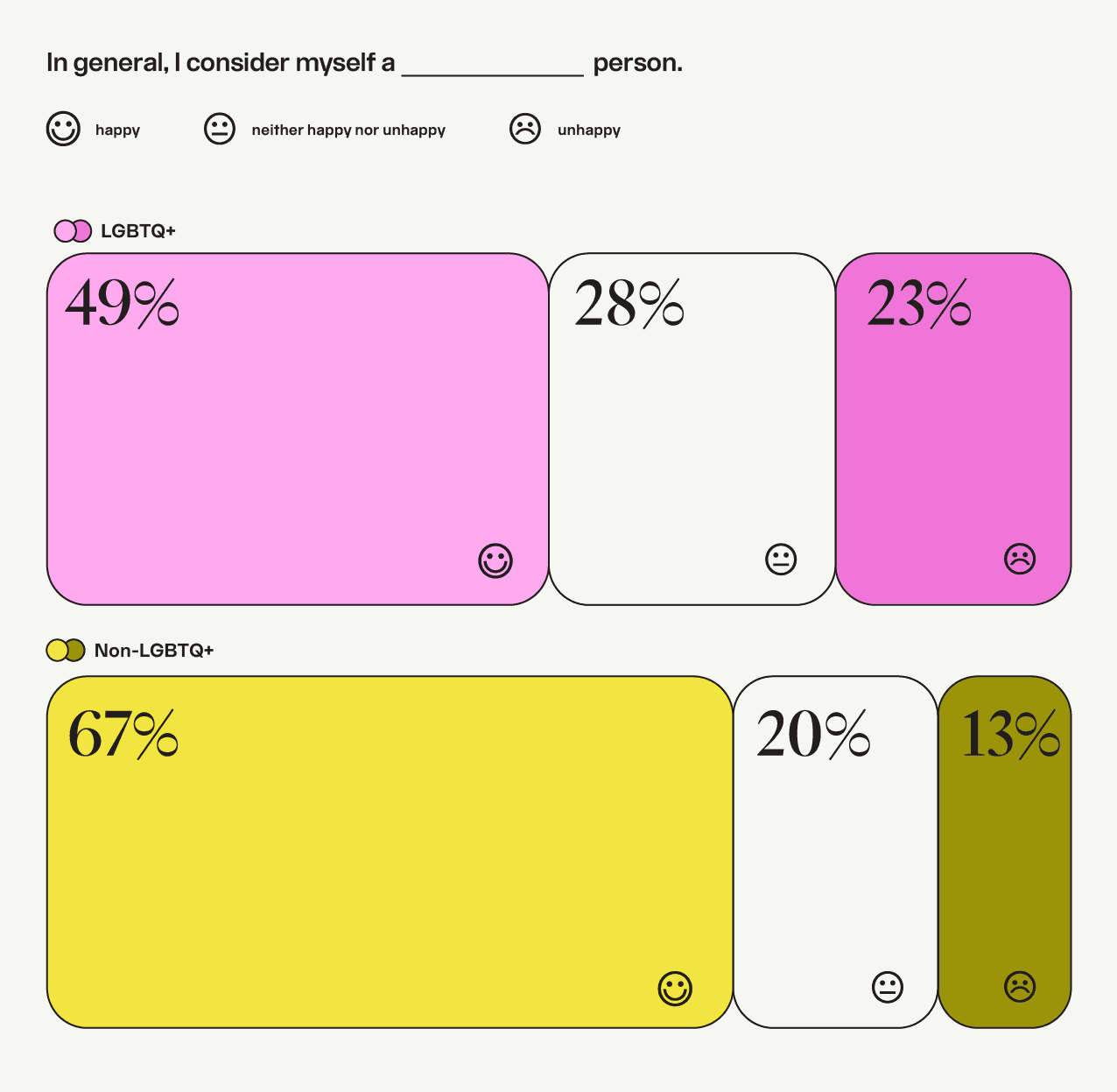
About six in 10 LGBTQ+ young people rate their mental health as “fair” or “poor” (61%). By comparison, four in 10 straight, cisgender young people rate their mental health as “fair” or “poor” (40%). LGBTQ+ young people also report unhappiness more often than their straight, cisgender peers do (23% vs. 13%).
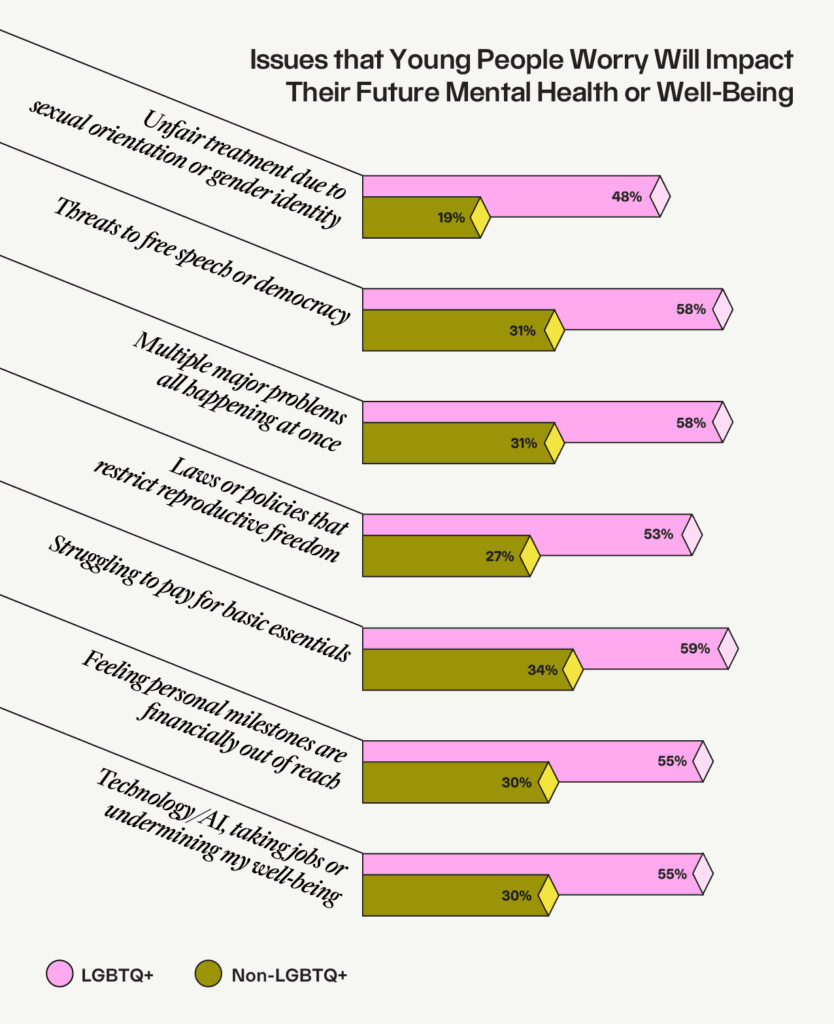
Nearly 60% of LGBTQ+ young people report that family issues, loneliness, schoolwork, and having no clear path in life each affect their well-being or mental health “a lot” to “quite a bit.” Among straight, cisgender young people, 41% or fewer report the same level of impact for these issues. In addition to these stressors, 51% of LGBTQ+ young people report that anti-LGBTQ+ sentiment, including homophobia and transphobia, negatively affects their well-being or mental health.
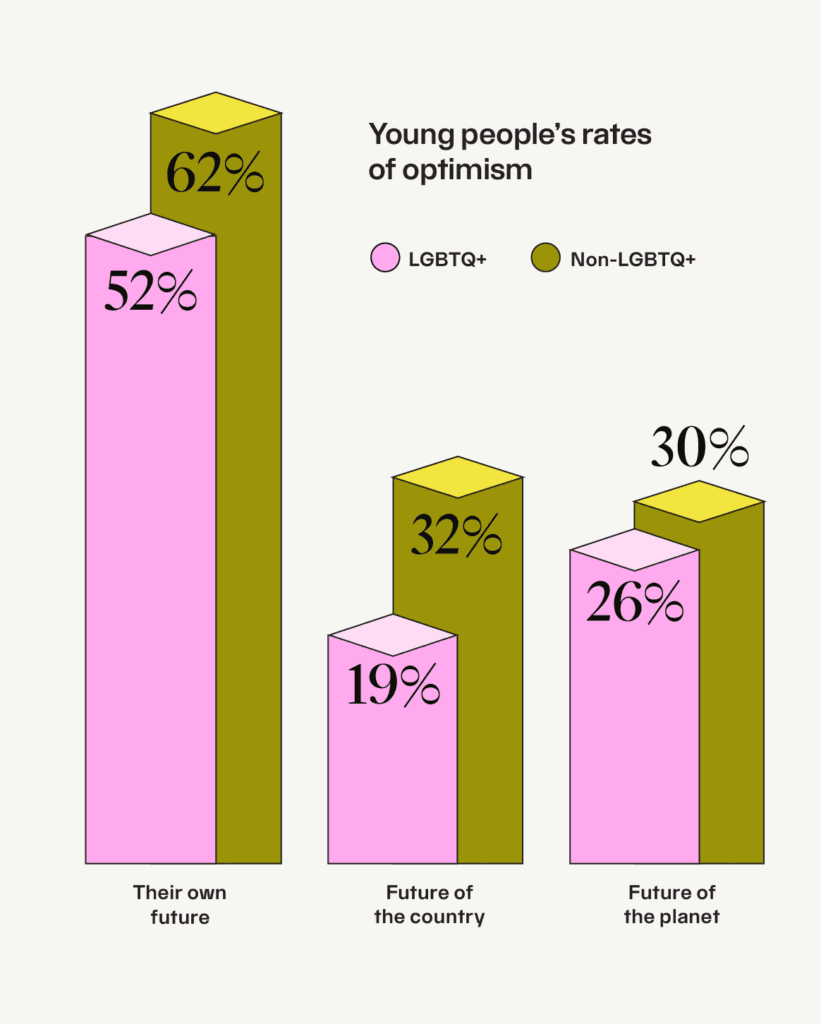
Despite experiencing less optimism about the future compared to their straight, cisgender peers, more than half of LGBTQ+ young people remain optimistic about their future. Both LGBTQ+ young people and straight, cisgender young people feel more optimistic about their own future than about the future of the country or the planet.
When they think about the future, LGBTQ+ young people report clear gaps between the milestones they say matter most and what they believe they can actually achieve. The largest gaps involve access to high-quality health care and homeownership. While 88% say access to high-quality health care is important and 80% say buying a home is important, fewer feel confident that they will achieve either goal (44% and 37%, respectively).
LGBTQ+ young people describe several areas where they need more support, especially for emotional and mental health. Among young people enrolled in school, fewer than half of LGBTQ+ students say they have enough school-based resources or programming to support their mental health and well-being (43%). Fewer than half also say they receive enough emotional support from adults at their school (44%).
Outside of school, LGBTQ+ young people report lower levels of self-acceptance (53% vs. 62%), emotional support from parents (53% vs. 61%), and mental health support (58% vs. 63%) than their straight, cisgender peers. At the same time, they report more emotional support from friends (64% vs. 59%).
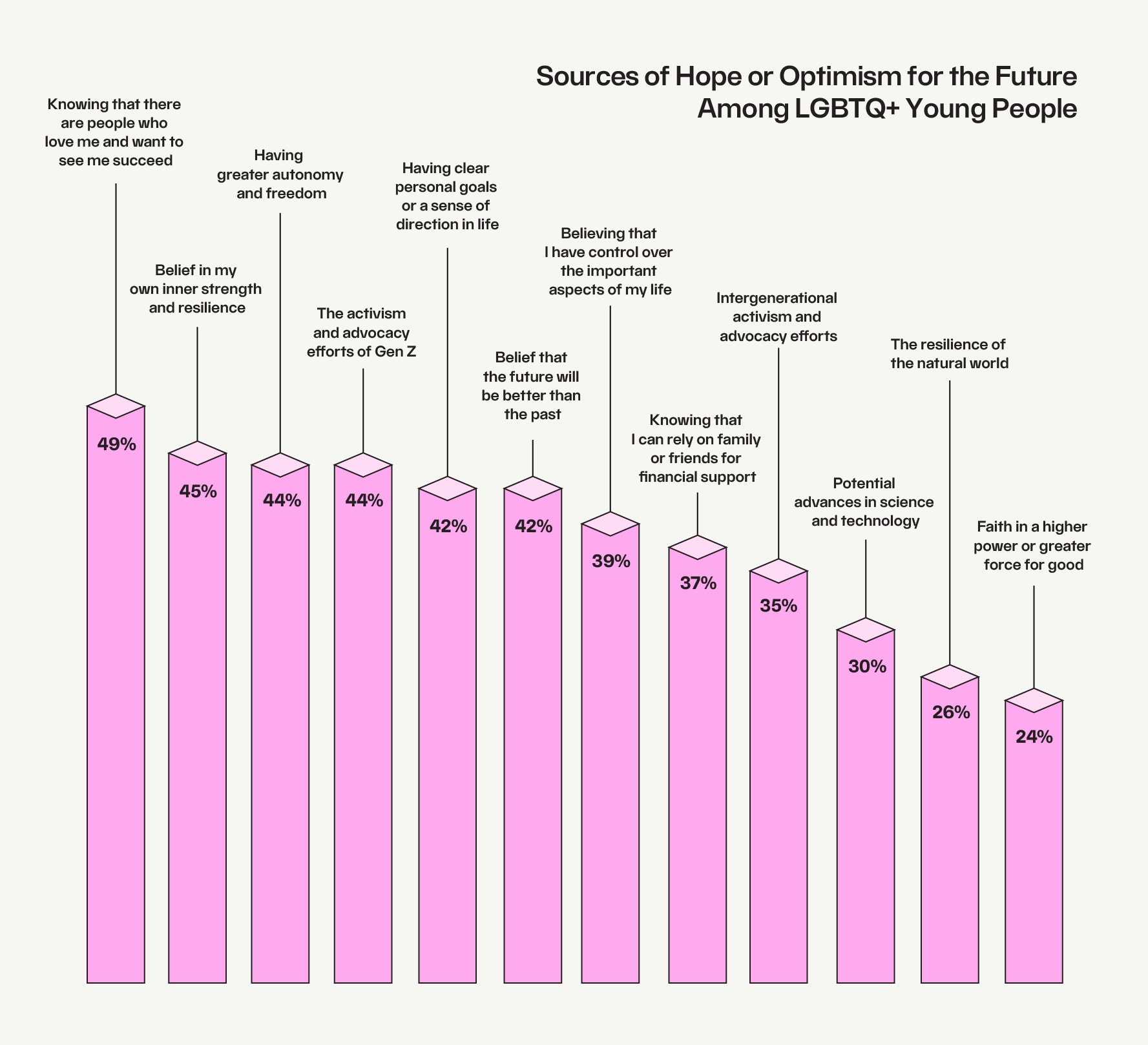
LGBTQ+ young people face many hardships, yet nearly all can name at least one source of hope or optimism (97%). About half (49%) say knowing that people love them and want to see them succeed gives them hope.
Many LGBTQ+ young people also find hope in their own resilience. Nearly half say belief in their inner strength and resilience gives them hope (45%). In addition, 44% say greater autonomy and freedom, such as no longer being under the control of parents or school, gives them hope. Fewer straight, cisgender young people say the same (29%).
Finally, 44% of LGBTQ+ young people say Gen Z activism and advocacy efforts give them hope. One white LGBTQ+ teen boy described what inspires him, saying, “Seeing classmates make eco-friendly tools with 3D printers, this creativity of the younger generation makes me think there will always be solutions to future problems.”
We need a coordinated effort across: