I’ve been getting into this old TV show called Cheers recently. It follows a retired baseball player, Sam Malone, running a bar in Boston called Cheers, interacting with a menagerie of colorful characters: a pretentious college student, a know-it-all mailman, a quick-witted accountant, etc.
What’s interesting about the show is that nearly all of the scenes are shot inside the bar. This was most likely due to budget constraints, but it leads to really interesting scenarios, since pretty much everything happens inside this space: a book signing, a veteran’s reunion, even a Shakespearean play! The bar becomes so much more than just “a bar.” It transforms into a flexible space for leisure, play, and camaraderie.
Watching Cheers got me thinking about if similar “third spaces” existed near me—places people can go to unwind outside of home and work (or for kids, home and school). Living in Vermont, which is considered to be the most rural state in the U.S., can be pretty lonely. Our small and sparse population leads to a rareness of physical spaces and regular social events. On top of that, being a younger person or coming from a marginalized background (e.g., BIPOC, LGBTQ+, neurodiversity, disability) adds additional barriers of access, multiplying those feelings of isolation.
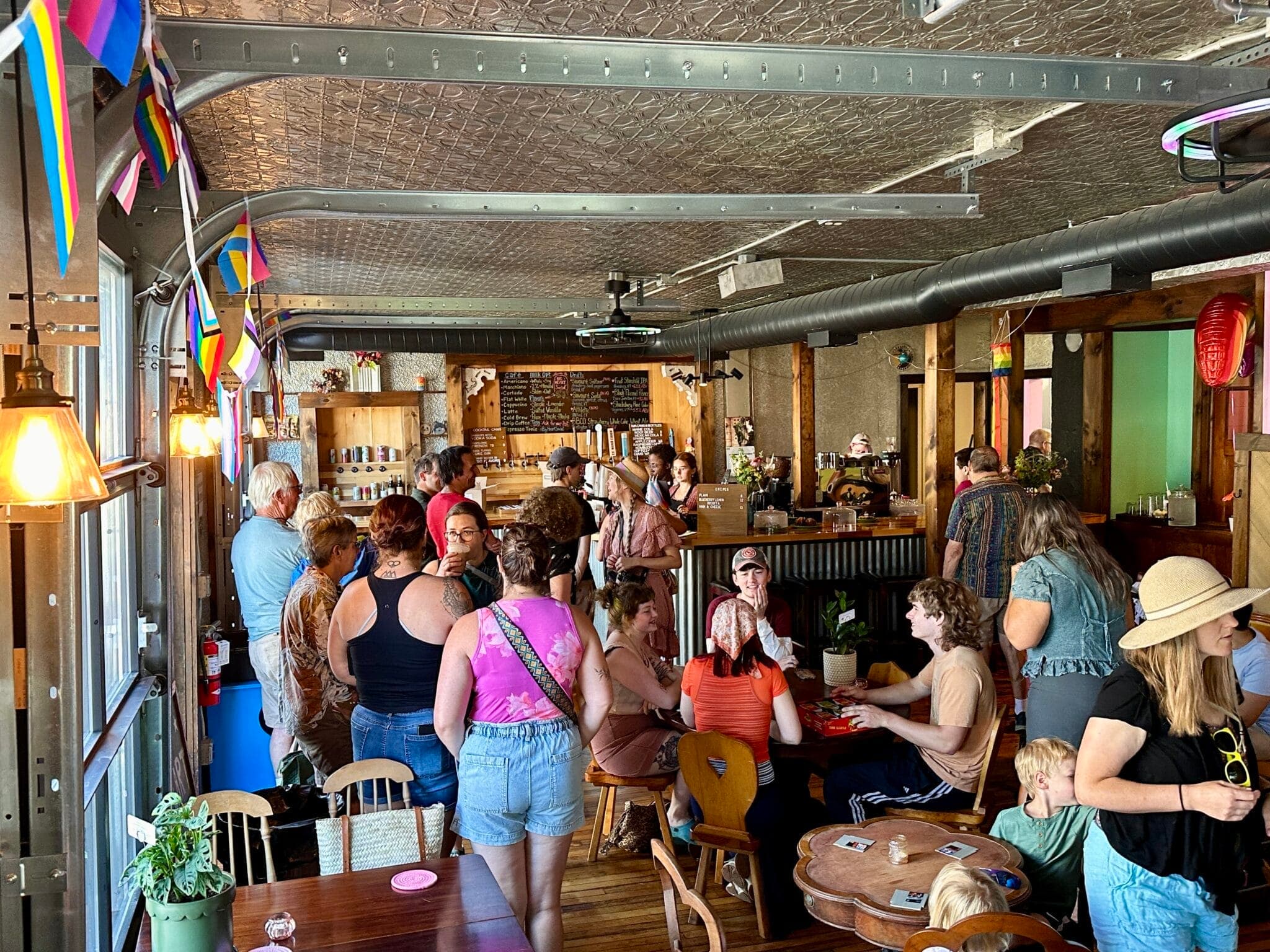
That’s why I got excited finding Big Heart Social last May. Big Heart Social promoted itself primarily as a café and bar but also as a bonafide third space.
Instead of being a business focused on nothing but profit, Big Heart wanted to be a community space to form genuine connections with its neighbors.
 Its messaging was clear: Big Heart was a place to stop and take a breath, an inclusive environment that forwarded marginalized voices, a place to just be yourself. Co-owner Shiloh Lawrence called it, “somewhere you can just go to exist without feeling like you need to do something.”
Now, there were similar spaces that had served this role for me, casual hangout spots for me and my friends (the local record store, a boba shop, and YMCA programs, to name a few). But the important distinction between them and a true third space was that all of them expected payment in exchange for occupying and enjoying the space. The two exceptions for me were the library and parks, but even those spaces have recently restricted access over who can and cannot enjoy them. The number of third spaces in the U.S. is dwindling, impacting everyone. But for those who live in rural areas, young folks, and those who face marginalization, the increasing feelings of targeted isolation are hitting hard.
Finding Big Heart Social surprised me.
There is a real importance for these kinds of physical third spaces necessary to build real community, without barriers of access.
I had never expected to find a place that would put someone like me first, to recognize my struggles, and to say, “We’re here for you.” Big Heart Social ended up being that place, not just for me, but for everyone who had been overlooked in our community.
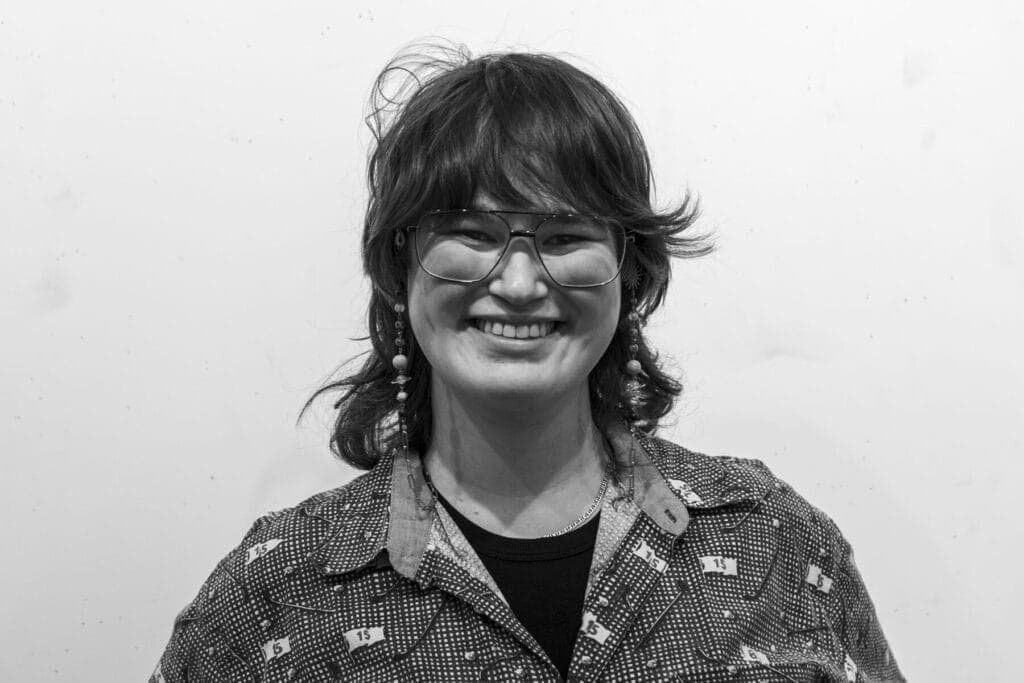
After talking with Shiloh, I got hired as Big Heart’s Community Engagement Manager, meaning I’m the one in charge of using Big Heart Social as a community-building third space! Thanks to Shiloh’s support, I’ve been helping set up events that connect neighbors and prioritize access to folks who aren’t usually prioritized, including a gender-inclusive clothing swap and a movie showing made by a trans-majority crew. It feels rewarding to get to talk with folks about what they want to see out of space and how they can get involved. I’ve grown real relationships with my neighbors and gotten to know them on a personal level. We’re actively building a community here.
On a more personal note, I never expected to be in this position, a semi-public figure who knows people on a first-name basis. Coming out of college, I expected to land a mundane office job, a place where I would put my head down and just work. But now, when I leave, I don’t just get goodbyes from my coworkers but from the patrons, too. It’s an uplifting feeling being recognized, something that imbues me with a lot of self-confidence I didn’t have before. I really do feel like Sam Malone, chatting with regulars as I do my work, flashing a cheerful smile as we catch up about life. To borrow from the Cheers theme song, I’ve finally found a place where everybody knows my name.